
027: American lawns, design literacy, and heavenly wedding stationery
And a prescient book for today.

Graphic design, visual delights, and things worth noticing, delivered twice a month.

Hi, happy June. Let me share some links with you. Right this way.

Prompt 004:
Design 15 logos for the following businesses from Bob’s Burgers (or your own). You can prepare fonts and colors beforehand.
Set a timer for 60 seconds for each logo.
Names are as follows: Elegant Doily Retirement Home, Fresh Feed, Top Hat Cinema, Fig Jam, Kim and Son’s Hardware, Special Girl Hair Salon, Reggie’s Deli, Rudy’s, Oceanside Savings and Loan, Sippy’s Bar, Supplies Party, Paprika & Pepper, Moo’s Clues, The Tomato Shack, Yarn Barn.
Making a logo in 60 seconds is insanely hard and they’re all bad but it was kind of a rush. I recommend doing an exercise like this if you need to get started creating something and feel like you don’t know where to start.
Inspired by @elliotisacoolguy and @kellauren’s videos.
Play it while you read.
🗞️ Los letterings bordados de Maite Canet via Yorokobu
An interview with Valencia-based Mexican art director, Maite Canet. Her typographic embroidery is beautiful and I loved reading her perspective on slow work.
📣 Note: The article is in Spanish, but you can translate to English in your browser.
“El bordado me ha enseñado a ser paciente, es una labor totalmente manual y pausada en la que no puede haber prisas, en la que todo fluye a un ritmo muy lento. Te relajas con cada puntada, con los movimientos repetitivos de la aguja, con el sonido del hilo al atravesar la tela…Conectas con el aquí y el ahora, y esto es genial para afrontar nuevos proyectos creativos.”
“Embroidery has taught me to be patient. It’s a completely manual and unhurried task where there can be no rush, where everything flows at a very slow pace. You relax with each stitch, with the repetitive movements of the needle, with the sound of the thread passing through the fabric…You connect with the here and now, and this is great for tackling new creative projects.”
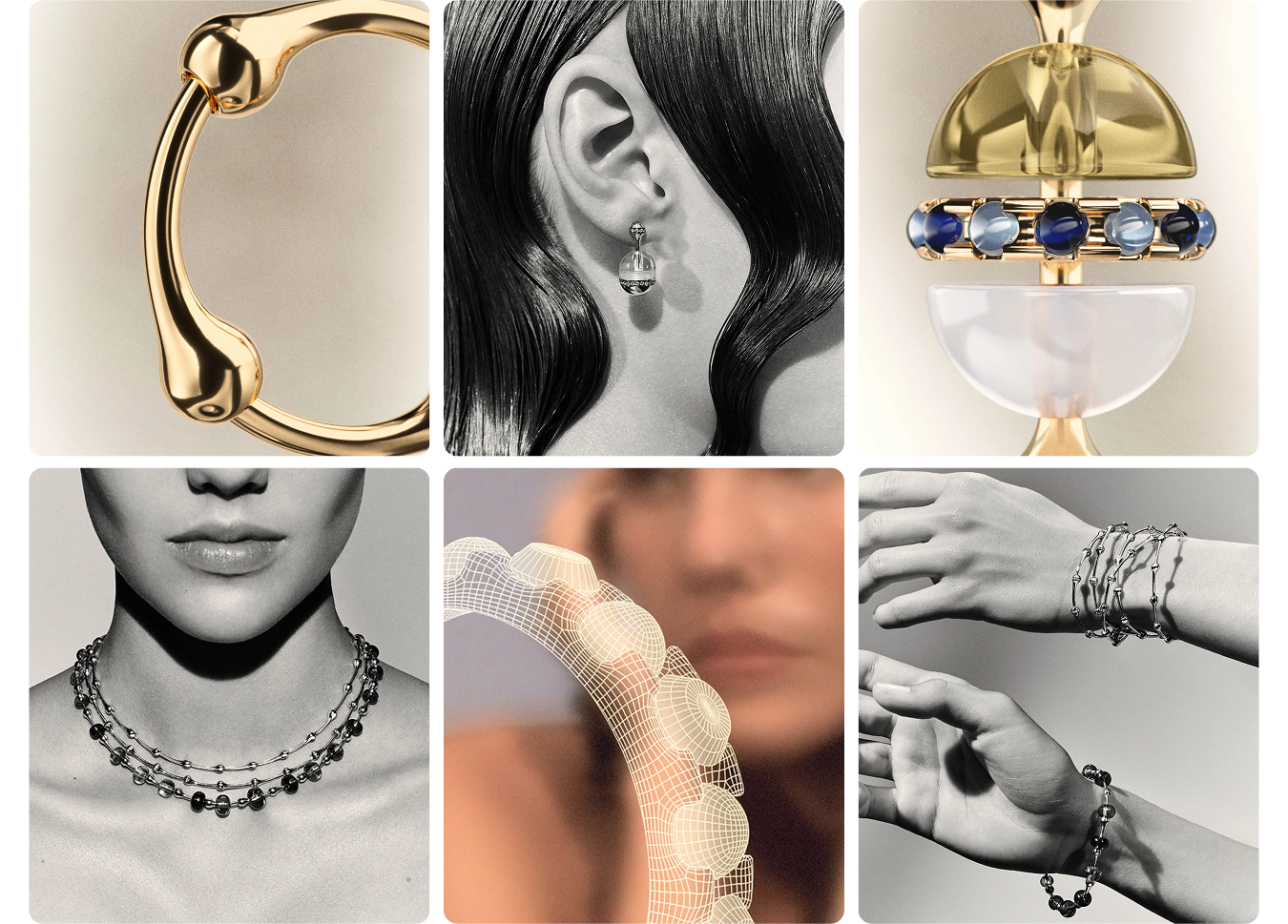
🖍️ Creative direction for Sarah Eisman Studio by Leslie David Studio
I gasped when I saw the creative direction for Sarah Eisman Studio’s jewelry brand. High contrast, elegant black and white film photography with interesting shapes transformed this work. I love that shot of the hands!!
🗞️ Design literacy in the age of intelligent automation by Willem Van Lancker
This takes a look at the profession of design in a time of AI acceleration, arguing for a shift into a broader mindset of curiosity, curation, conviction, obsession, orchestration, and literacy. An important read for every designer in these times.
“This human element of design literacy will become as important as verbal literacy, not only in understanding culture and aesthetics but also in forming and expressing new ideas. It’s a new type of intelligence and design that will separate those who thrive from those who fade into the noise.”
A gallery of design work broken out into different categories. The portfolio section is my favorite to scroll through. Incredibly helpful and inspiring!!!

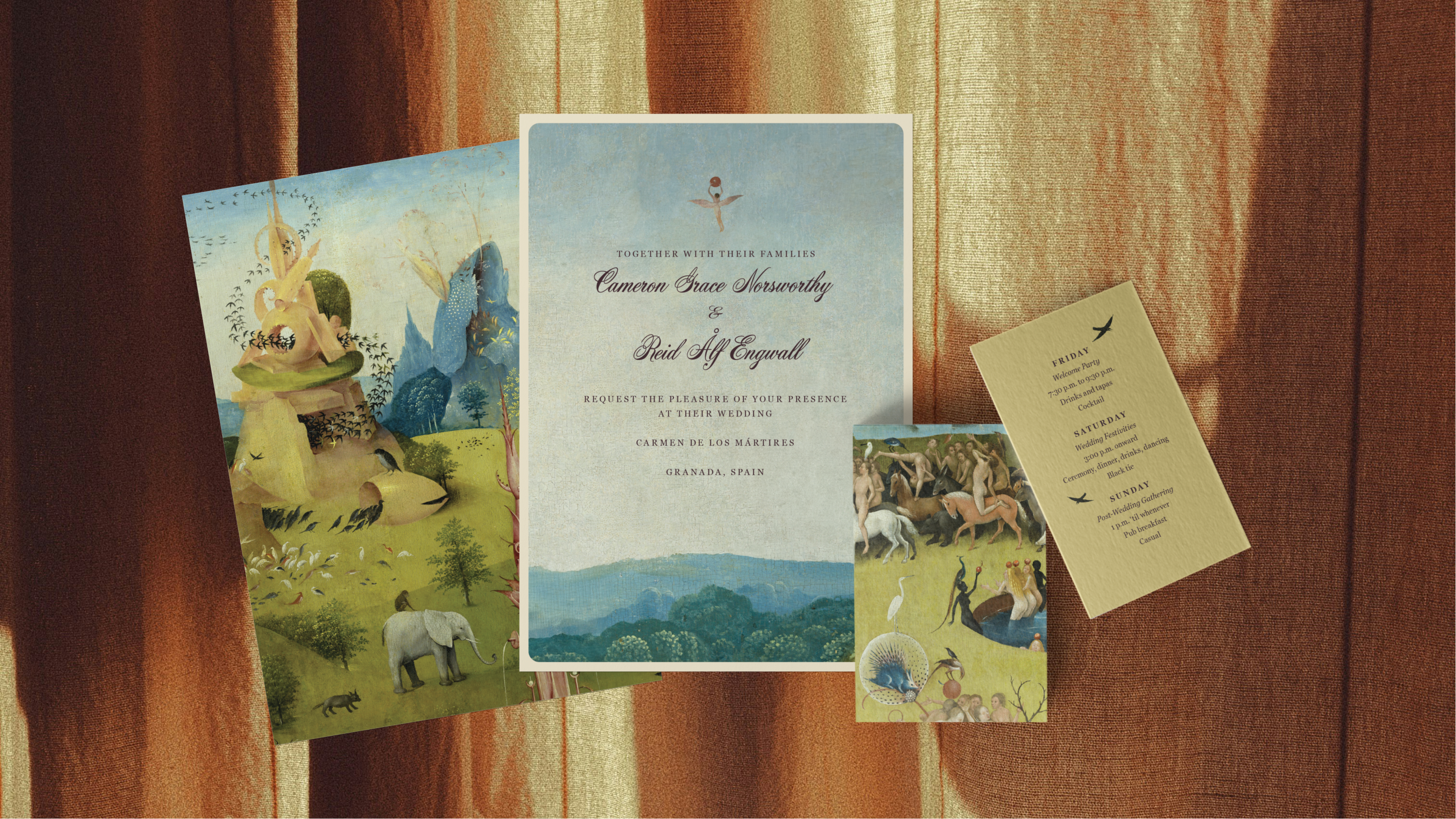
💌 Wedding Invitation design for my friends Cameron and Reid
My friends Cameron and Reid had a raucous wedding in April in Spain and asked me to design their wedding stationery—a gigantic honor. I loved working on this project for such special people who feel so deeply.
They asked me to feature the 15th century triptych oil painting, The Garden of Earthly Delights by Dutch painter Hieronymus Bosch.
This is what Cameron and Reid had to say about it:
Reid: So… Hieronymus Bosch was a massive part of my undergrad thesis (The Use of Mental Illness as Propaganda in the Protestant Reformation: proto Liberalism and Capitalism in Reconquest and the Age of Luther), like the only visual sources that I used other than the sketches of Albrecht Dürer.
Bosch embodies it all, and he did it without talking about it. To this day no one really knows his full motivations, benefactors, etc. There’s some evidence on his collaboration with Erasmus of Rotterdam in Big E’s writing “In Praise of Folly” and in Bosch’s “Ship of Fools.” All that said, we don’t know a whole lot about Bosch. Though in his art, everything is apparent. I’d like to think in the same spirit as Lynch (see the attached image).
Bosch is letting it all hang out. The hedonism and corruption are right under the surface of a world run by strict doctrine and dogma. The highest of highs and the lowest of lows, and, most importantly (from a Catholic perspective) the incessant shame from even approaching these subjects.
What makes him different though? What makes that fire and brim stone humanism fresh and not overly sulfurous? The little guys. The trout knight, the funnel guy, I could go on. The little guys relieve us of the horror by saying, “hey look at me, I’ve got a tiny hat.” Damnation is not all it’s cracked up to be when the hellfire fits in the Malibu Barbie dream house and it’s poking some guy in the bum with a threaded needle. Horror is constant, but so are the tiny things.
Which brings us to Granada. Lorca, the most brilliant native of the town that we chose for our marriage, mused often of the aesthetic of the diminutive or tiny found in his homeland. “The beauty and charm of little chambers, miradors (balconies or viewpoints), and gardens, all of which represent small, enclosed spaces where one can find beauty and tranquility.” Tiny guys in Andalusia. Tiny bombs in Bosch. See the attached David Gilmour essay.
That’s that.
Cameron: My input is that I love all the little freaks doing freaky shit.
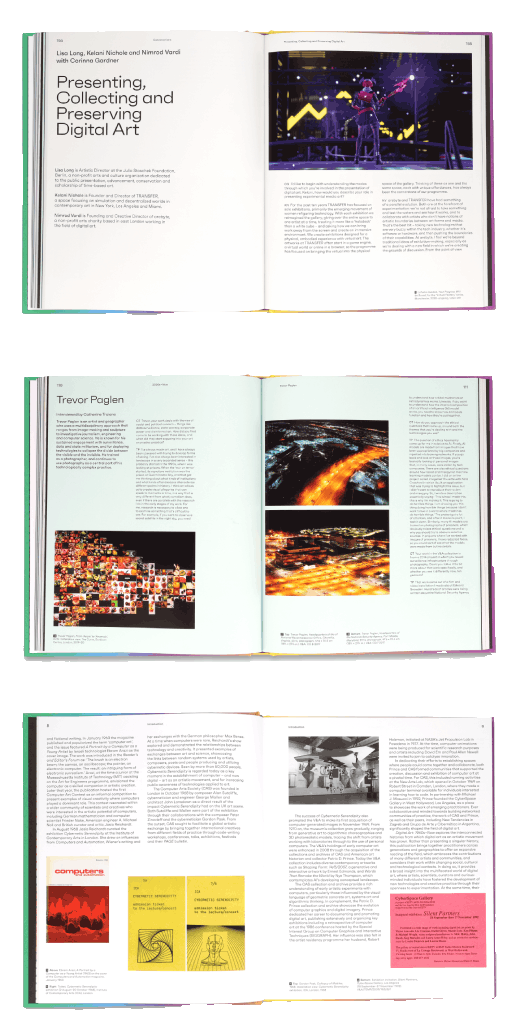
📖 Digital Art: 1960s–Now by Pita Arreola, Corinna Gardner, and Melanie Lenz
Edited by the curators of design and digital art at the Victoria and Albert Museum in London, this book provides a tour of the history of digital art along with essays by contemporary artists and designers. It weaves modern discourse with archival work beautifully. A great gift for a graphic designer in your life! I got it for Christmas last year.
Some more things worth noticing:
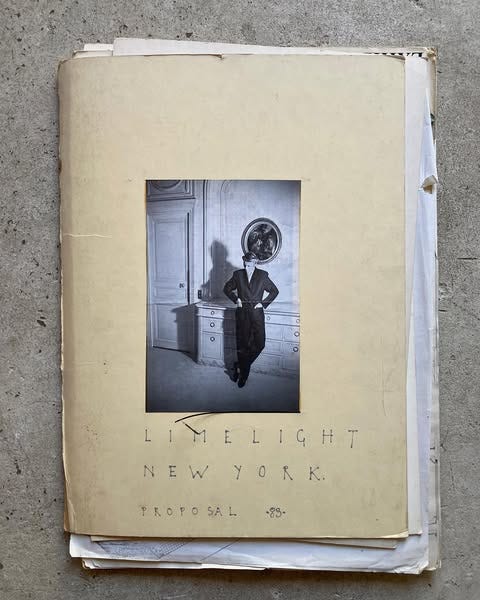
📜 The proposed interior design for The Limelight in 1983 by Madison J Santos from Doubles Tennis
The Limelight is an iconic church-turned-nightclub which was famous in the 80s and 90s. These sketches are incredible, I am beyond jealous of whoever got them. I really wish they had been scanned because I would kill to leaf through them just once!!!
🗞️ The cult of the American lawn by Oliver Milman
A look into the entrenched American tradition of manicured lawns and their environmental impact. HOAs are notorious for legally enforcing arbitrary rules for the sake of societal conformity in the name of civility and property values, even at the expense of ecological benefits.
For a nation obsessed with individualism, it’s ironic that so many older suburban Americans have chosen to make uniform lawn enforcement their hill to die on.
“How did the American lawn become the site of such vicious disagreements? American culture embodies a zeal for individuality and property rights — of the idea that people should be able to conduct their own affairs in their own territory without the neighbors or the government imposing their views and forcing conformity. Like so many other cultural quarrels, the lawn has this deep contradiction at its heart.”
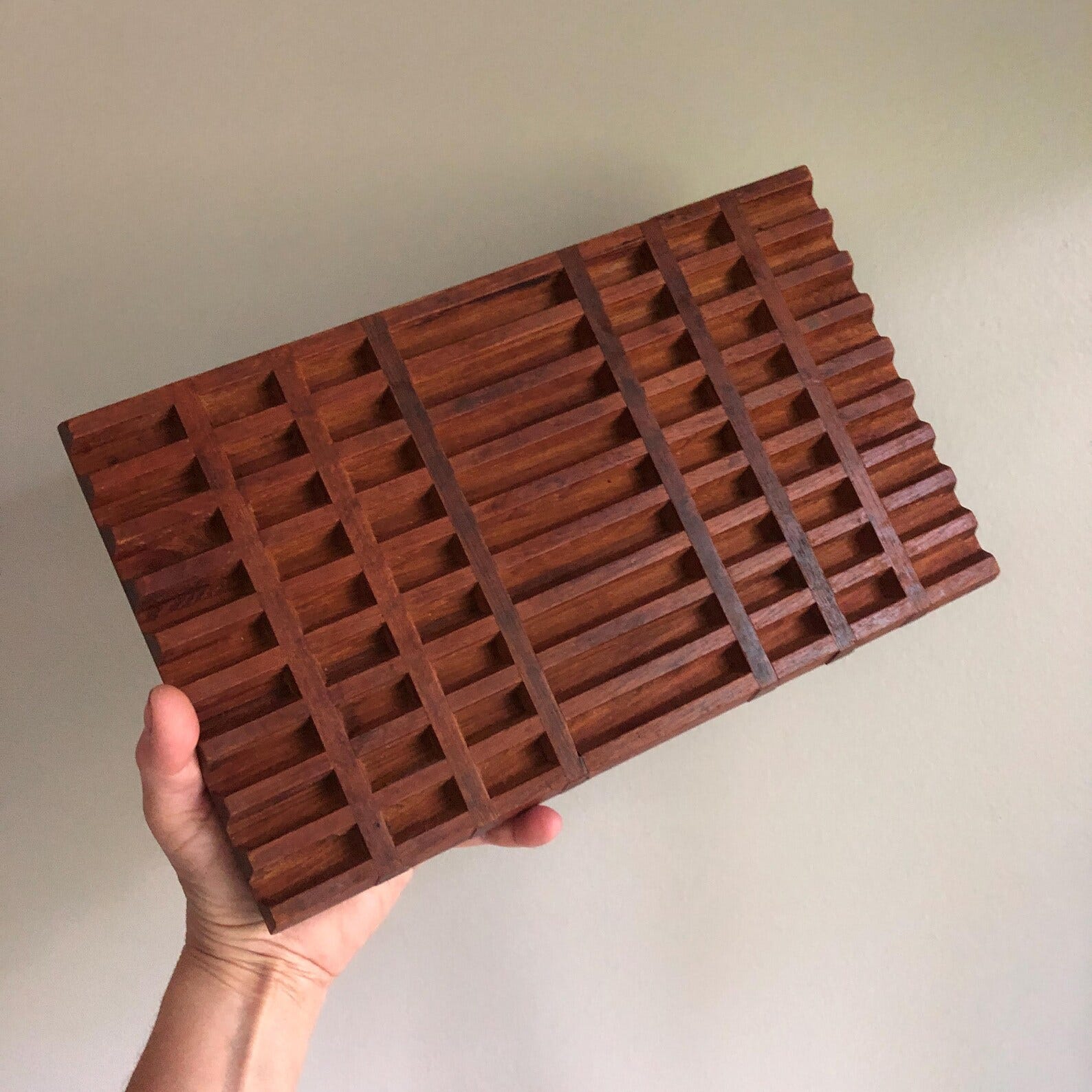
Imagine placing a boule of freshly baked bread on this beauty…It sold out before I could publish but it was too good not to share.
📖 Amusing Ourselves to Death by Andrew Postman
Here’s the PDF too.
I’m halfway through and keep being blown away by how relevant the 1985 state of entertainment, news retention, and attention spans feels today.
A point I found particularly interesting: in the late 1700s, there was a rise in the distribution of pamphlets and newsletters and this was critiqued at the time because Americans were reading fewer books and more short form content that would expire quickly. The times…they’re precedented………
“In 1786, Benjamin Franklin observed that Americans were so busy reading newspapers and pamphlets that they scarcely had time for books…Franklin’s reference to pamphlets ought not to go unnoticed. The proliferation of newspapers in all the Colonies was accompanied by the rapid diffusion of pamphlets and broadsides. Alexis de Tocqueville took note of this fact in his Democracy in America, published in 1835: ‘In America…parties do not write books to combat each other’s opinions, but pamphlets, which are circulated for a day with incredible rapidity and then expire.’ And he referred to both newspapers and pamphlets when he observed, ‘the invention of firearms equalized the vassal and the noble on the field of battle; the art of printing opened the same resources to the minds of all classes; the post brought knowledge alike to the door of the cottage and to the gate of the palace.’”
Time is a flat circle, isn’t that comforting?

Get to reading, bye!

See you next time. You can expect this newsletter in your inbox on the first and third Monday of the month.
If you’d like to support the newsletter, you can buy me a coffee.